How car dealerships use AI: nine jobs it does well today
Dealership AI is easiest to judge one job at a time. These are the nine jobs dealers hand to AI most often, what each looks like on a real lead, and where a person still has to step in.
Dealership AI4 min read
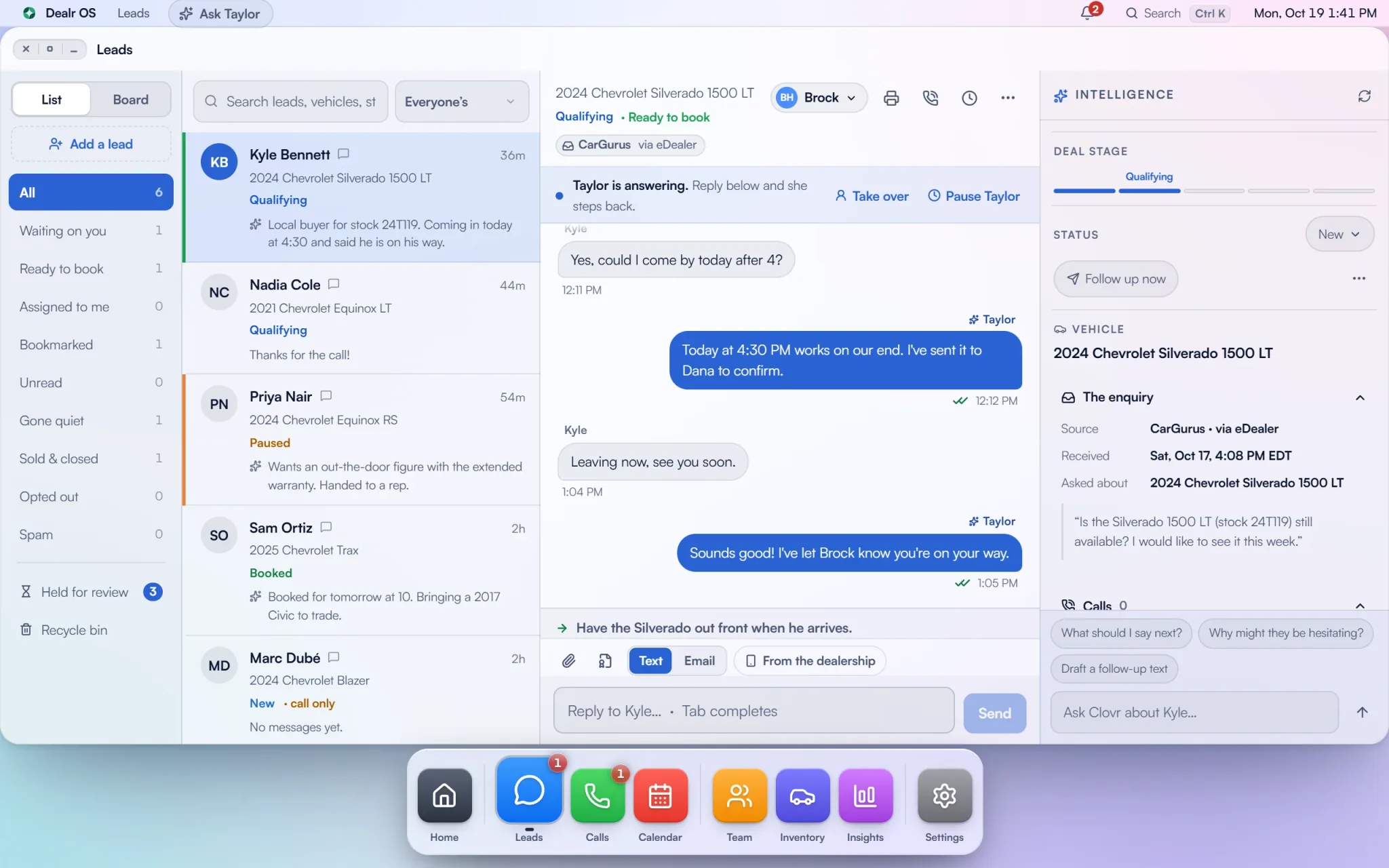
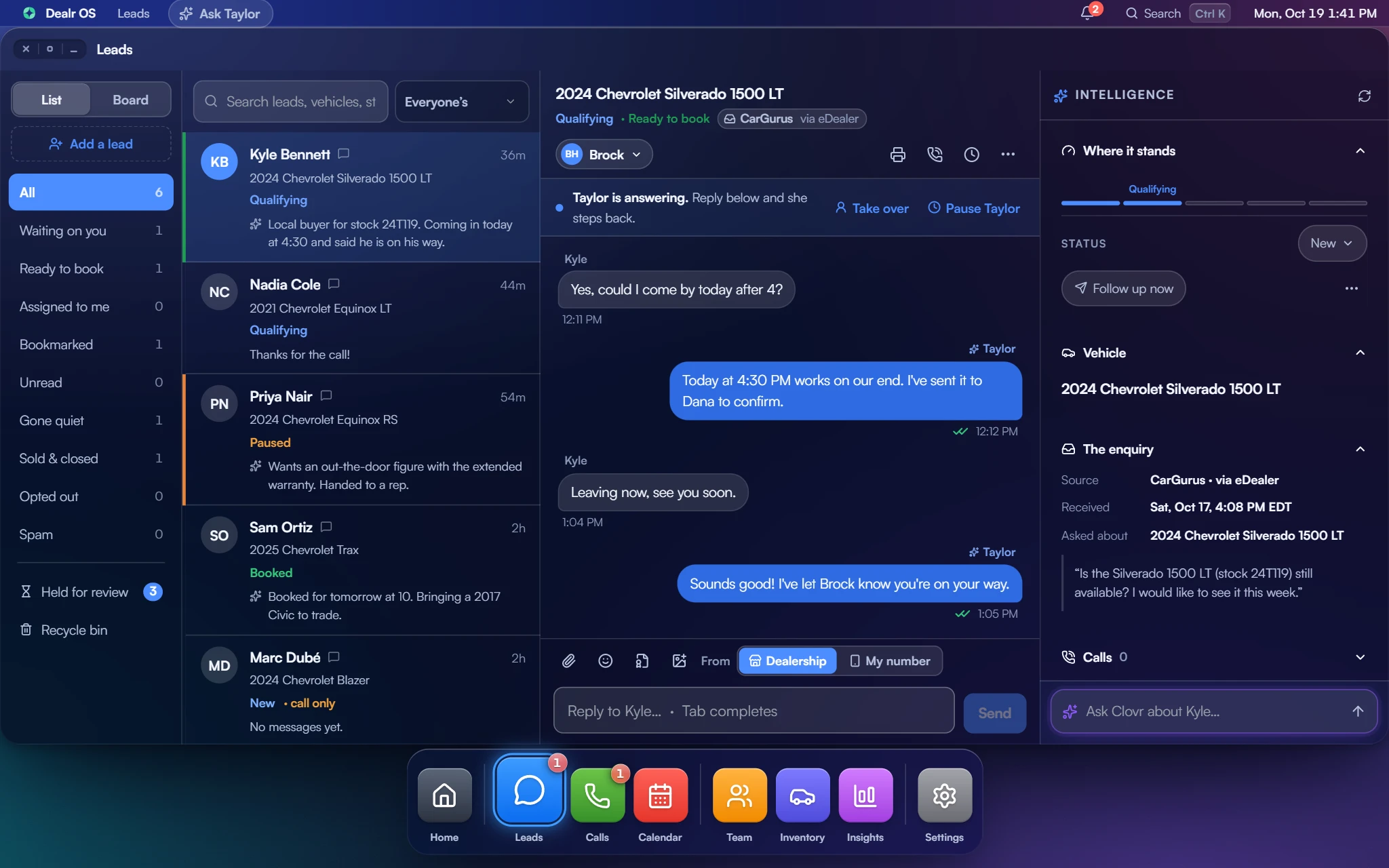
Ask ten dealers what "dealership AI" means and you will hear ten answers, because the phrase covers everything from a chat bubble on your website to software that writes vehicle descriptions. It is easier to judge one job at a time. These are the jobs dealers most often hand to AI, starting with the one that pays first. For the bigger picture, read our guide to dealership AI.
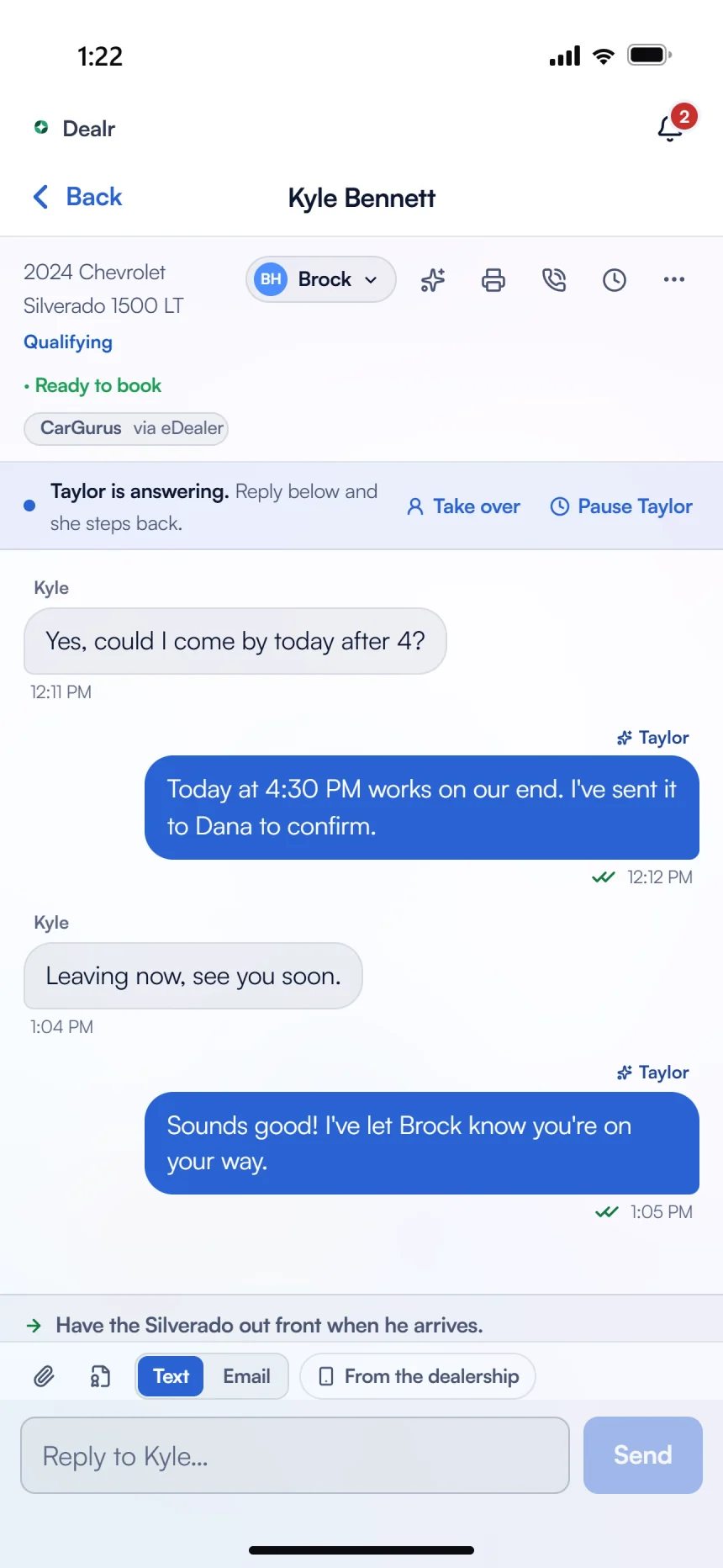
1. Answering new internet leads in seconds
A lead from your website, AutoTrader, CarGurus or Facebook Marketplace is a customer comparing stores right now. The first useful reply tends to win the conversation, and people struggle to be first: 51% of dealerships answer an internet lead within 15 minutes, which leaves the other half slower than that (Pied Piper Internet Lead Effectiveness Study, 2026, 3,290 dealerships).
AI can answer in seconds during your texting hours, about the exact vehicle the customer asked about. At Parry Sound Chevrolet Buick GMC, the median first text was 5 seconds, and 94% went out in under 10. How fast a dealership should answer a lead.
2. Qualifying without a form
Nobody fills in a long form at 11pm. A good assistant asks what a salesperson would, one question at a time: are you local or coming from out of town, are you trading something in, how soon are you buying. By the time a rep picks up the lead, the answers are already in the thread.
3. Following up when a lead goes quiet
Plenty of buyers reply on day three, not minute three. AI checks in a few times over the following days and then stops, instead of giving up after one try or texting forever. Following up on leads that went quiet.
4. Setting up visits for your team to accept
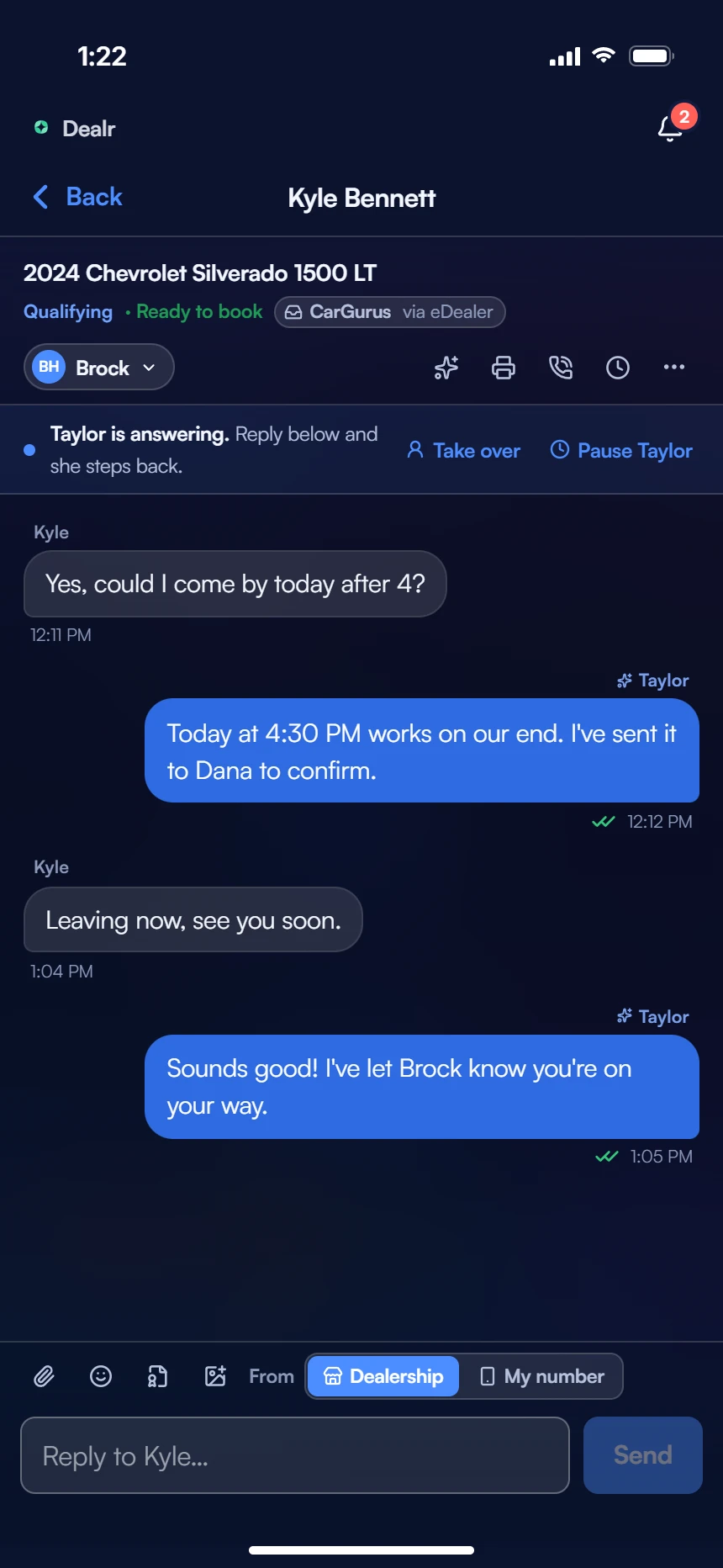
The point of most lead conversations is a visit. AI can offer times and pass the customer's pick to your team, who accept it with a tap. What it should never do is confirm a time nobody at the store agreed to. Booking more test drives from internet leads.
5. Getting the trade-in details by text
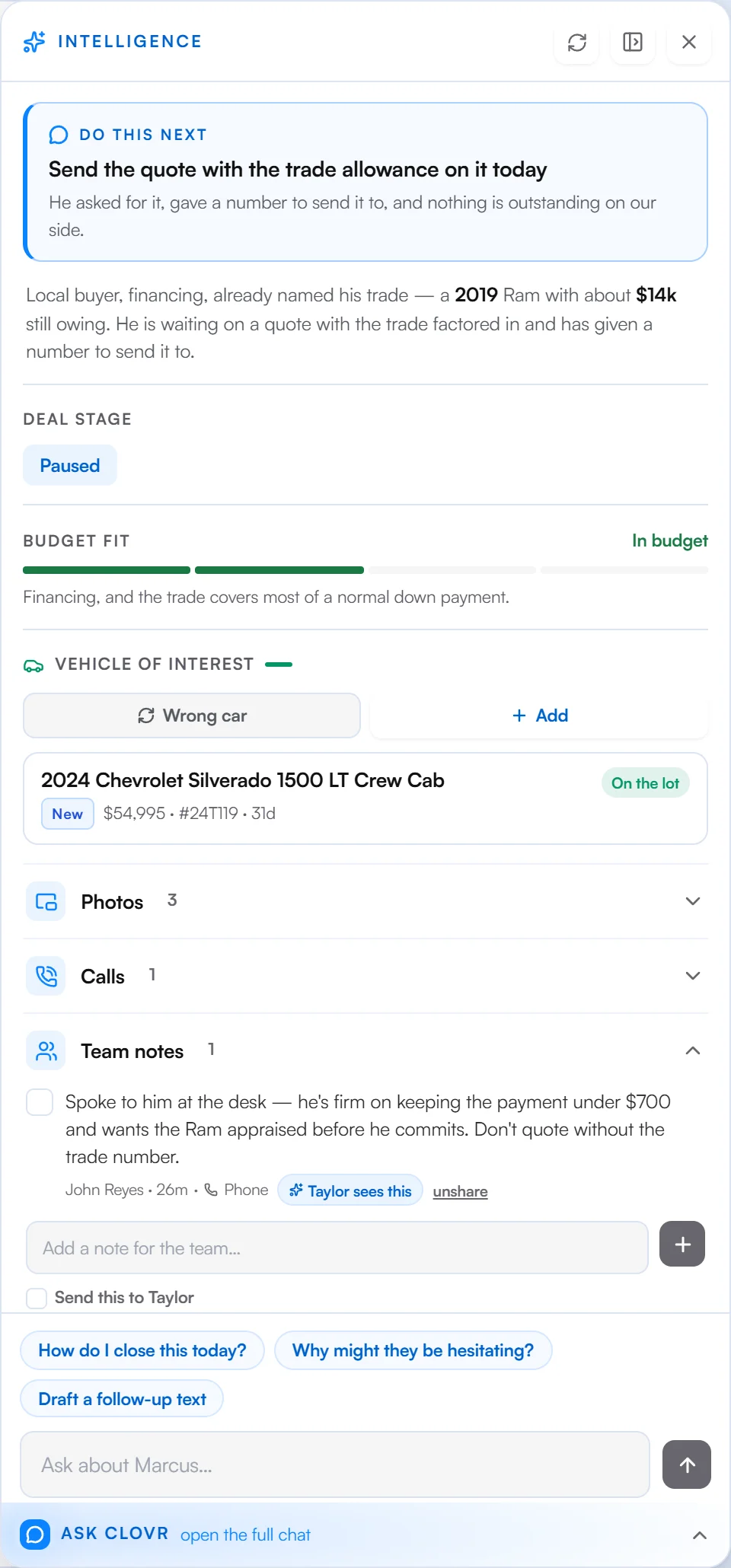
Year, make, mileage and a few photos, collected before the customer drives in, so your appraiser is not starting cold. The appraisal itself stays with a person. Trade-in questions to ask by text.
6. Answering in the customer's language
A customer who writes in French or Spanish can get an answer in the same language, while your team reads the whole thread in English. Answering leads in French and Spanish.
7. Turning sales calls into notes and follow-ups
Calls are where a lot of deals move, and where notes go missing. AI can transcribe and summarize the calls on a line you route through it, so the next text picks up from what was said, and managers can coach from real calls instead of memory. Turning sales calls into follow-ups.
8. Sending service requests to service
Sales leads and service requests often arrive through the same website forms. AI working for the sales floor should recognize a service request and give the customer your service department's number, not a pitch for a new truck. Service scheduling software is its own category; if you want that, judge it separately.
9. Showing you what happened to every lead
Because every message is written down, AI makes your lead response measurable: when each lead got its first reply, which customers wrote back, which conversations turned into visits. For many stores it is the first honest look at their own follow-up. Audit your dealership's lead response.
Where a person still has to step in
- Prices beyond the listed one. Discounts, payments and financing come from your sales manager.
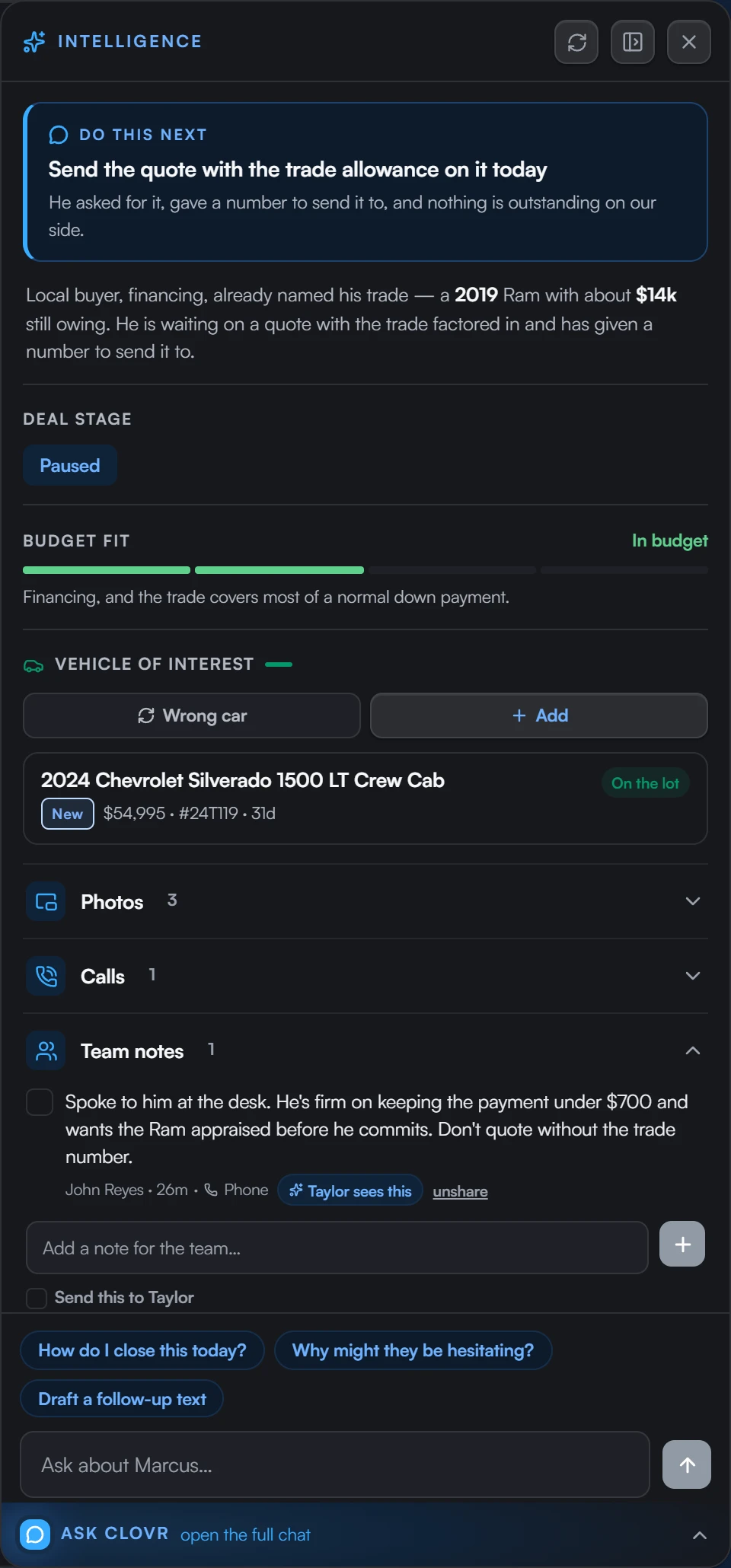
- Trade values. AI can collect the details; a person appraises the vehicle.
- Certification and warranty. Each describes a contract your store signs, so a person confirms it.
- An unhappy customer. Hand the whole thread to a person, quickly.
Where to start
Start with the first job on this list. It is the easiest to measure (how fast the first reply goes out, how many customers write back) and it is where most stores lose the most leads. Then judge any tool on your own leads rather than a demo, and read the conversations. What to look for in an AI assistant for your dealership · Is dealership AI worth it?
Questions dealers ask
What is the most common use of AI at car dealerships?
Answering internet leads: replying to website, marketplace and Facebook inquiries within seconds, asking a few qualifying questions and setting up a visit for the team.
Does dealership AI replace salespeople?
No. It handles the first reply, the follow-up and the booking so salespeople spend their time with buyers who are ready. Customers still buy from a person.
Can dealership AI quote prices?
It should quote only the listed price from your inventory feed for the exact vehicle. Discounts, payments and financing should always come from your sales manager.
Should customers know they are talking to AI?
Yes. A good assistant never pretends to be a person and never denies being an AI when a customer sincerely asks.