Turning phone calls into follow-ups that know what was said
A customer tells your rep exactly what they want on the phone, then gets a generic follow-up the next day. Here is how to close that gap.
Sales process5 min read
Why follow-ups forget the phone call
Picture a buyer who spends a good while on the phone with your rep. They explain that they need seating for the whole family, that they're trading in a minivan with a transmission problem, and that they can't come in until the weekend. The next morning, the CRM sends: "Thanks for your interest in Northbrook Motors. Is there anything I can help you with?"
From the customer's side, that message erases the call. It sounds like a form letter because it is one. The information existed. It just never made it from the rep's head into the lead record, so nothing that came after could use it.
This happens for ordinary reasons. Reps are on back-to-back calls. Notes get typed later, or not at all. A note that says "called, interested, will come in" is technically a note, but nobody can write a good follow-up from it.
What should a sales call note include?
A useful call note answers the questions the next person to touch the lead will have. Keep it short, but get these in:
- The vehicle. Which car, and whether they're flexible on trim or options.
- Their situation. Trade-in, timing, who else is part of the decision, and whether they're local.
- What was promised. Photos, a trade-in appraisal, a call from the manager. Anything the store said it would do.
- What they're waiting on. Their own reasons, like a spouse who needs to see it or a payout figure from their lender.
- The next step. A visit, a call, a decision. If there isn't one, say so.
When notes are typed from memory at the end of the day, the details that matter most, like the exact worry about the trade-in, are the first to go.
How to write a follow-up text after a sales call
The best follow-up after a call proves someone listened. It mentions one specific thing from the conversation and asks one question that moves things forward.
Hi Marcus, it's Jordan from Northbrook Motors. Thanks for the call today. I checked, and the Traverse you asked about has the captain's chairs you wanted. Does Saturday morning still work to see it?
Yes, Saturday works. Can you look at my trade then too?
Yes. Bring the van and both sets of keys, and a manager will appraise it during your visit.
Compare that to the generic version. Same rep, same customer, same car. The only difference is that the details made it onto the lead. A few rules keep follow-ups like this one consistent:
- Use the customer's words. If they said "the blue one", say the blue one.
- Don't repeat the whole call back to them. One detail is enough to show you listened.
- If you promised something, deliver it in the follow-up instead of promising it again.
- Ask one question. A text with several questions gets an answer to the easiest one.
If the customer goes quiet after that, the cadence is its own topic. See how to follow up with car leads that went quiet.
When the rep promised something on the call
Promises made on the phone are where follow-ups go wrong most often. The rep says "I'll send you the trade number this afternoon," gets pulled onto the floor, and the afternoon goes by. The customer's next text is "Still waiting on that number."
Write every promise into the note so a manager or another rep can see it's owed. And be careful with automated messages that make promises on a rep's behalf. A text that says "Jordan will call you shortly" is a promise nobody checked. Any automatic follow-up is safer saying what's happening without committing a person to a time.
A follow-up that ignores the last phone call tells the customer nobody was listening.
Recording and transcribing sales calls: tell your callers
Recording or transcribing calls makes the notes problem much easier, because nothing depends on memory. It also comes with rules, and they differ by country.
In Canada, privacy law expects a business to tell customers when a call is recorded and why. In the US, federal law allows recording with one party's consent, but some states require the consent of everyone on the call. The simple approach in both countries is a short notice at the start of every inbound call, and telling customers on outbound calls too.
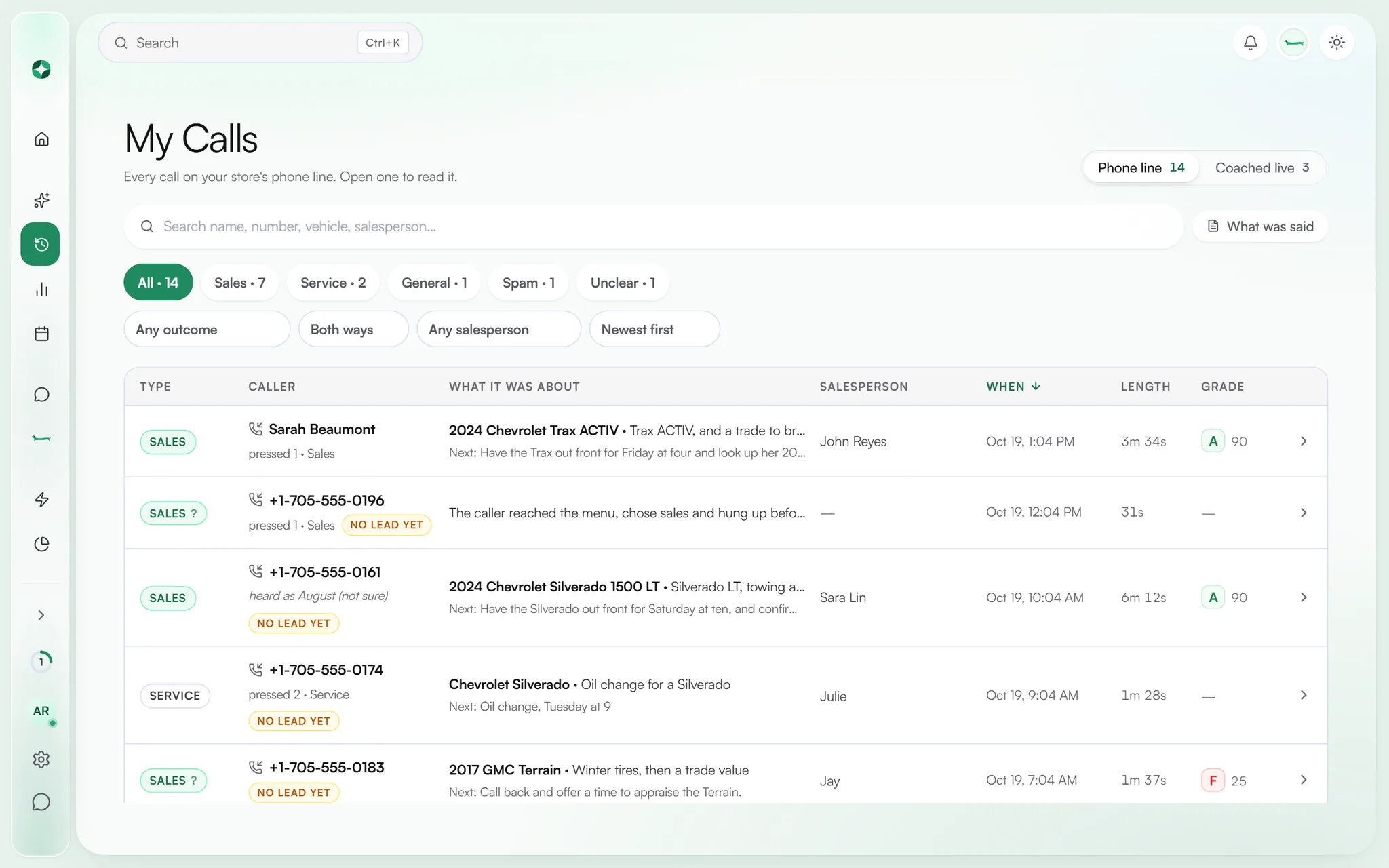
A transcript is only useful if someone reads it. A long transcript attached to a lead isn't a note. A short summary at the top, with the vehicle, the promises and the next step pulled out, is what lets the next person act.
What to change at your store this week
- 1Agree on what every call note must capture, using the list above, and post it where reps take calls.
- 2Have managers read a handful of call notes each week and ask: could I write a good follow-up from this?
- 3Turn off generic follow-up templates that fire after a call is logged, or rewrite them so they start from the call's details.
- 4Track open promises on the lead and check them every day.
- 5Put your recording notice in place before you start transcribing.
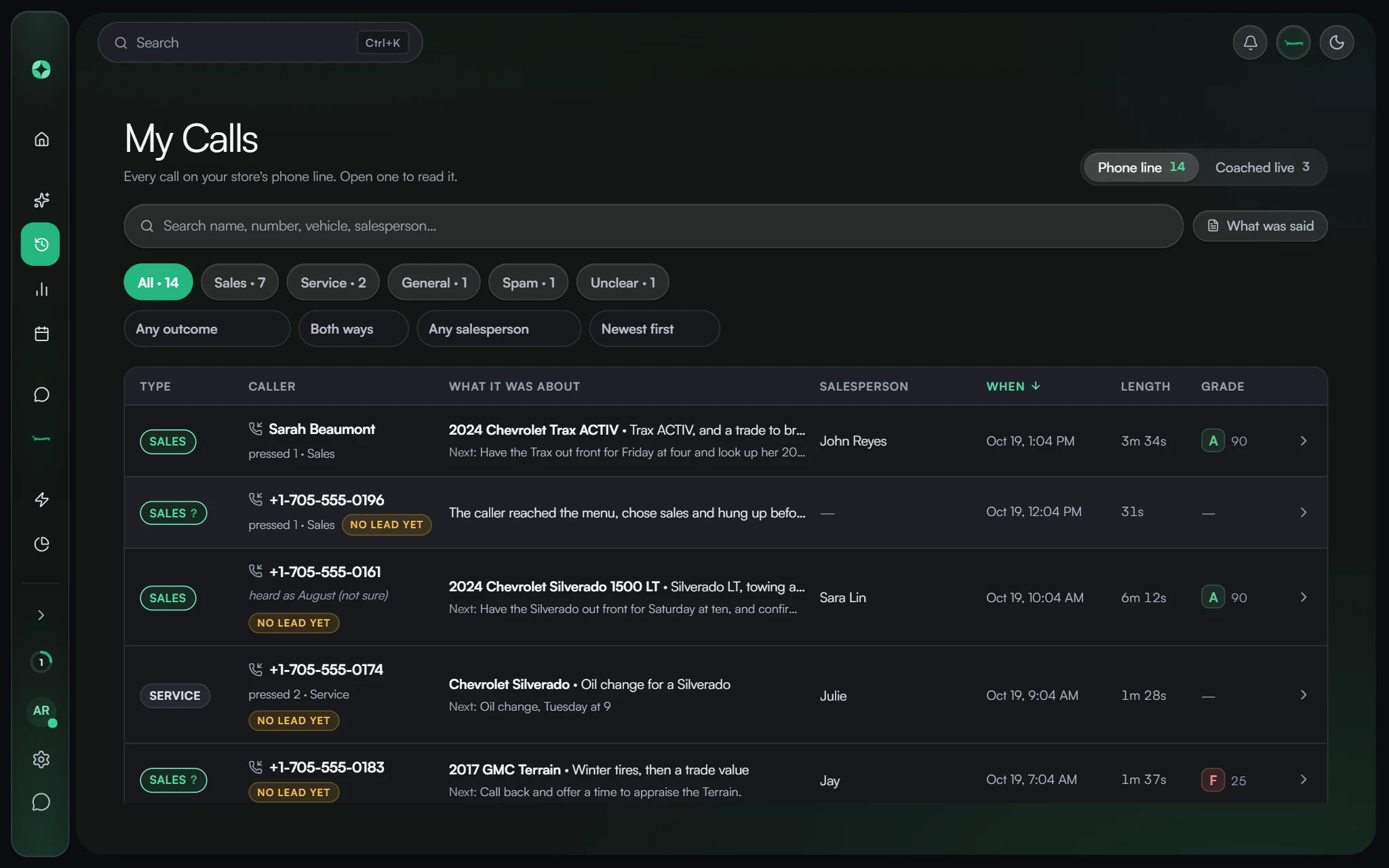
If your store line is routed through Clovr Dealr, calls on that line are transcribed and summarized onto the lead, and Taylor's follow-up texts start from that summary instead of a blank template. You can see how it works on a demo lead.
Questions dealers ask
What should you text a customer after a sales call?
Mention one specific thing from the call, deliver anything you promised, and ask one question that moves toward a visit or a decision. Avoid generic "thanks for your interest" messages.
What should dealership call notes include?
The vehicle, the customer's situation such as trade-in and timing, anything the store promised, what the customer is waiting on, and the next step.
Do you have to tell customers a sales call is recorded?
In most cases, yes. Canadian privacy law expects notice and a reason, and some US states require every party's consent. Confirm the rules for your province or state with your own counsel.
Can call transcripts be used for follow-up texts?
Yes, once the transcript is turned into a short summary on the lead. The follow-up can then mention what the customer actually said instead of starting from a template.