How to follow up with car leads that went quiet
A lead that stops replying usually hasn't decided against you. Here's what to send, how to space it out, and when to close the lead politely.
Sales process5 min read
Why car leads go quiet
People fill in lead forms between other things. They're at work, comparing a few stores, or waiting for the weekend to think it through. A lead that stops replying hasn't necessarily decided against you. Often the conversation stalled because the next step wasn't clear, or the last message asked too much.
- They got the answer they needed and are thinking it over.
- They're waiting on something you can't see, like a conversation at home.
- Your last text asked about budget or credit, and they didn't want to answer that by text.
- They bought somewhere else and didn't think to tell you.
Only the last one is a real ending. The rest are reasons to follow up well.
What to say in a follow-up text
The rule is simple: every follow-up should give the customer something, or make replying easier. "Just checking in" does neither. It asks the customer to do the work of restarting the conversation.
Things worth sending:
- An answer to something they asked earlier that you didn't fully cover.
- Something they'd want to see: photos of the back seat, the cargo area with the seats folded, the tires.
- A real change, like a lower listed price on the car they asked about, or a similar one arriving.
- One easy question that can be answered in a word, like "Still looking, or did you find something?"
Hi Priya, it's Sam at Northbrook Motors. You asked about cargo room in the Traverse. I took a photo with the back seats folded down. Want me to send it?
Sure
Here it is. If it looks right, I can set up a time for you to see it. Is a weekday evening or Saturday better?
Saturday morning works
Every follow-up should give the customer something, or make replying easier.
A follow-up cadence that doesn't wear people out
There's no single right schedule, but a good cadence starts close together and spreads out. Here's a simple pattern to start from:
- 1Same day: answer the question they asked, then ask one easy question back.
- 2Next day: a short text that adds something, like a photo or an answer you said you'd find.
- 3Later that week: a phone call, unless they asked for text only. If you get voicemail, say in a sentence why you're calling and leave it there.
- 4The following week: a text or an email with something new, or a straight question about whether they're still looking.
- 5After that: a monthly check-in, until they buy, say no, or your consent runs out.
Then adjust it to the person. A customer who says "I'm buying in the spring" doesn't want a text every week until then. Put a date on the lead, tell them you'll check in closer to spring, and do it. A customer who answers quickly every time is telling you to move faster.
Change the channel before you change the tone. Someone who ignores texts may pick up the phone, and someone who never answers calls may reply to an email at night.
When to stop following up with a lead
Follow up as long as each message has a reason and the customer hasn't asked you to stop. These are the signs it's time to close the lead:
- They opt out. STOP, "please don't text me" and "take me off your list" all count. Opt them out across the store. A short confirmation is the last thing they get from you.
- They bought somewhere else. Thank them, close the lead with that reason, and don't try to talk them out of it.
- Your consent has run out. In Canada, an inquiry gives implied consent under CASL for 6 months. In the US, follow your consent records, the TCPA and your state's rules. See CASL and texting customers and texting rules for US dealerships.
- Nothing gets a response. Texts, a call and an email have all gone unanswered over several weeks. Send a closing text and pause.
The closing text
A closing text is short and polite, and it gives the customer an easy way back. It's honest about what happens next, and it leaves the door open.
Hi Marcus, it's Sam at Northbrook Motors. I haven't heard back, so I'll stop texting about the Sierra. If you're still looking later on, reply here anytime and I'll pick it up.
Thanks. Still looking, just busy at work. Can we talk next week?
Of course. I'll text you Monday morning.
Follow-ups should know what was already said
Nothing makes a follow-up feel automated faster than ignoring a conversation that already happened. If the customer talked to a rep on the phone yesterday about their trade-in, today's text shouldn't ask whether they have one.
- Log call notes on the lead, not in someone's head or notebook.
- Keep one owner per lead, so the customer isn't hearing from several people.
- Read the whole thread before you send anything.
- When a lead changes hands, say so: "Sam's off today, it's Alex. I've read your conversation with him."
There's more on this in turning phone calls into follow-ups.
Follow-up mistakes that cost you the lead
- Sending "just checking in" with nothing new.
- Asking for budget, credit or a down payment by text.
- Inventing urgency. If you say someone else is looking at the car, it has to be true.
- Sending the same template to every lead, whatever they asked.
- Texting after a customer has asked you to stop.
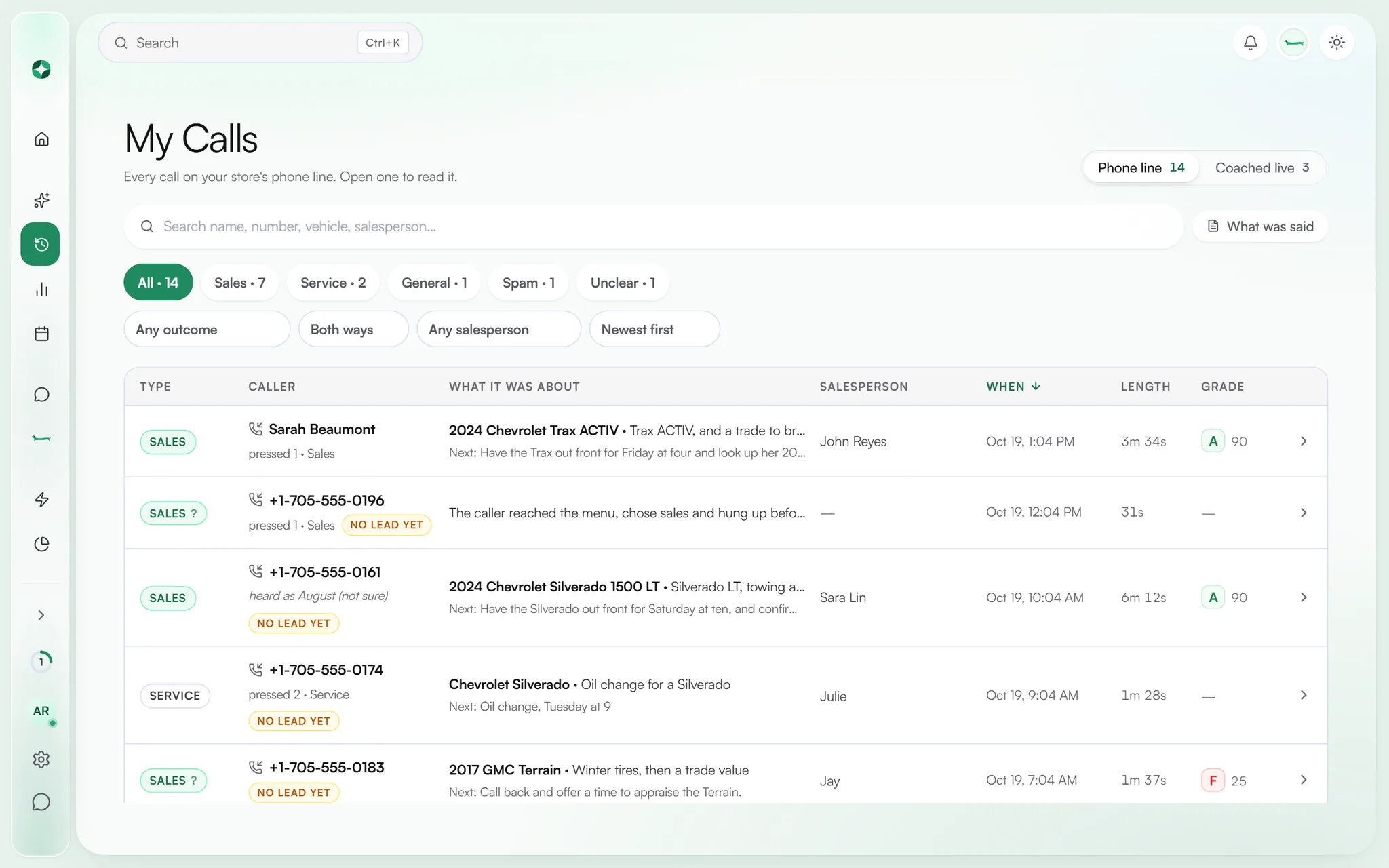
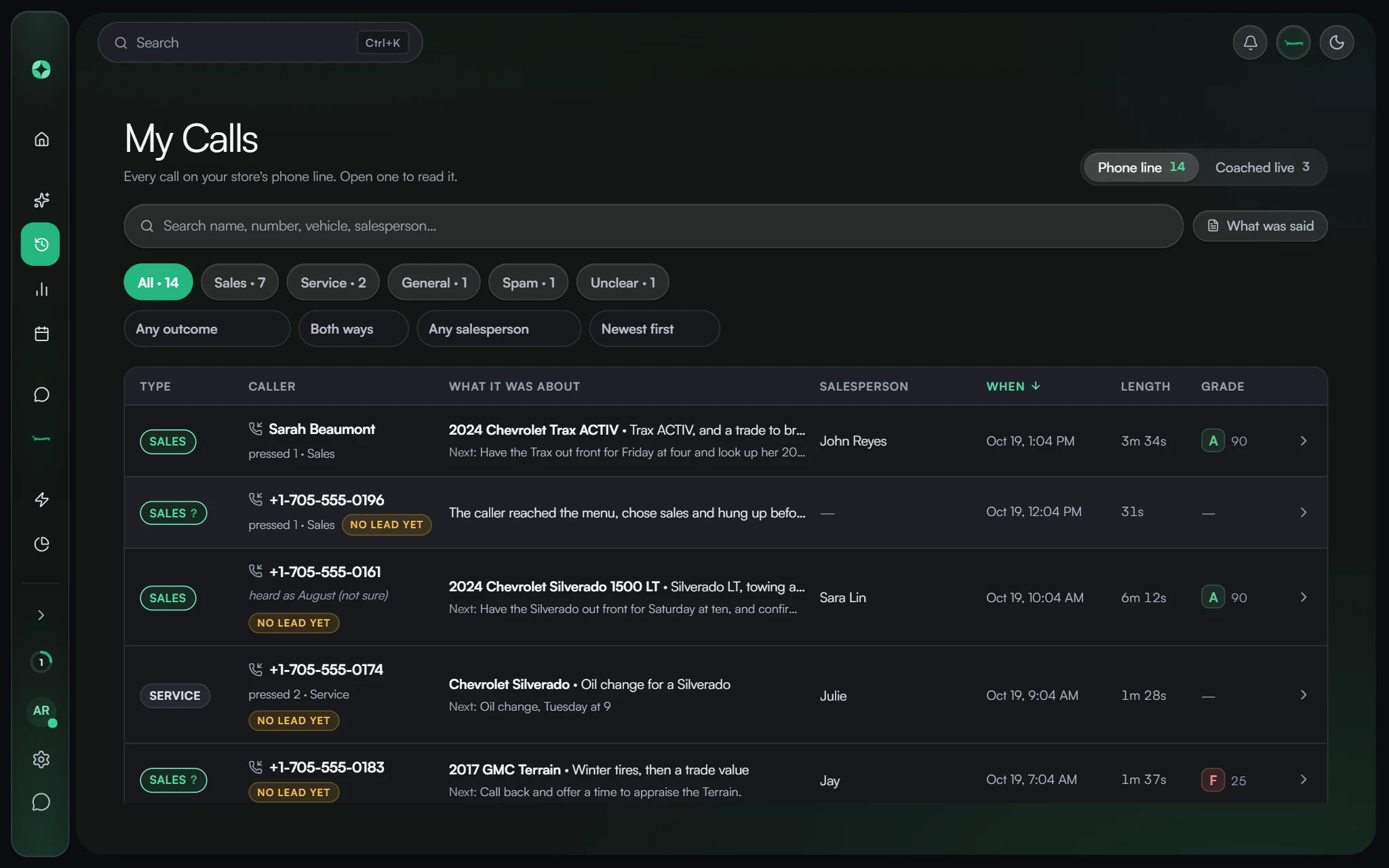
Clovr Dealr's assistant, Taylor, follows up on internet leads by text and hands the lead to a rep when the customer is ready. When a call on a store line routed through Clovr is transcribed and summarized onto the lead, her follow-ups start from that summary. She never promises when someone from the store will call.
Questions dealers ask
How many times should you follow up with a car lead?
There's no fixed number. Keep going while each message adds something and the customer hasn't asked you to stop. When texts, a call and an email have all gone unanswered, send a polite closing text and pause.
What should a follow-up text to a car buyer say?
Something new: an answer, a photo, a real change in the car's status, or one easy question. Avoid "just checking in" with nothing attached.
How long can a Canadian dealership keep texting an internet lead?
Under CASL, an inquiry gives implied consent for 6 months, unless the customer opts out sooner. A purchase gives implied consent for 2 years. To keep texting after implied consent runs out, you need the customer's express consent.
When should a dealership stop following up?
When the customer opts out, says they bought elsewhere, or your consent has run out. Record the reason on the lead so nobody restarts the conversation by mistake.