How to audit your own dealership's lead response
Your CRM says every lead got a response. Test leads sent the way a customer sends them show you how long that took, what it said, and where leads slip through.
Lead response6 min read
Why audit your own lead response?
Most managers know their response time from a CRM report. That report usually measures when someone opened or touched the lead, and some systems count an automatic email as a response. It can't tell you what the customer saw on their phone, or whether the answer was any good.
The only way to know is to be the customer. A lead response audit is a set of test leads you send yourself, at times you choose, from contact details your team won't recognize. It costs nothing but your time, and it shows you the store from the customer's side.
How to set up a lead response audit
- 1Use a phone number and email address your team won't recognize, with a believable name to match.
- 2Pick vehicles you have in stock, each with a listed price on your website.
- 3List every place your leads come from: your website's vehicle pages, your contact form and each third-party listing site.
- 4Write a short, realistic question for each test: is it still available, what's the price, can I see it Saturday.
- 5Add a service request sent through a sales form, because real customers send those too.
- 6Keep a log of when each lead was sent, where from, and the time of every reply.
Tell as few people as possible. If the team knows a test is coming, you'll measure the test, not the store.
Send test leads at the hours customers actually shop
A test sent mid-morning on a Tuesday shows the store at its best. Customers don't only shop then, so spread your tests across the week:
- A weekday morning, when the desk is fully staffed. This is your best case.
- Lunchtime, when the floor is thin.
- A weekday evening, after the BDC has gone home.
- Saturday afternoon, when the showroom is at its busiest.
- Late at night or on a day you're closed, to see what the customer wakes up to.
Vary the source too. A lead from your website and one from a third-party site can take different routes into your CRM, and one may be slower or land with the wrong person.
For tests sent after close, note how quickly someone answers once your texting hours open. There's more on those leads in the leads that arrive after you close.
What to time, and when to stop the clock
Start the clock when you submit the form. Stop it at the first message that answers what you asked, by text, phone or personal email. An automatic "thanks for your inquiry" email doesn't stop the clock, and neither does a voicemail that only says "give me a call back".
For each test, write down:
- The time of the auto-reply, if there was one.
- The time and channel of the first real reply.
- Who replied, and whether they named the store.
- How many different people contacted you.
- What happened when you stopped replying.
Leave some tests unanswered on purpose and see whether anyone follows up, and with what. A store can be quick on the first reply and then go silent.
A CRM export, which we walk through in how fast should a dealership answer an internet lead, shows the trend across every lead. Test leads show what one customer actually went through.
Read what was said, not just how fast
A fast reply can still be a bad one. Screenshot every reply, read it the way a customer would, and check it against a short list:
- 1Did it say who was texting and from which store?
- 2Did it answer the question you asked?
- 3Was it the right vehicle, down to the trim or stock number?
- 4Was the price the listed price on your website?
- 5Did it ask one clear question, or several at once?
- 6Did it promise something the store can't guarantee, like a discount, a payment or a call at a set time?
- 7Did the service request get the service department's number, or a sales pitch?
Is the grey Terrain still available? What's the price?
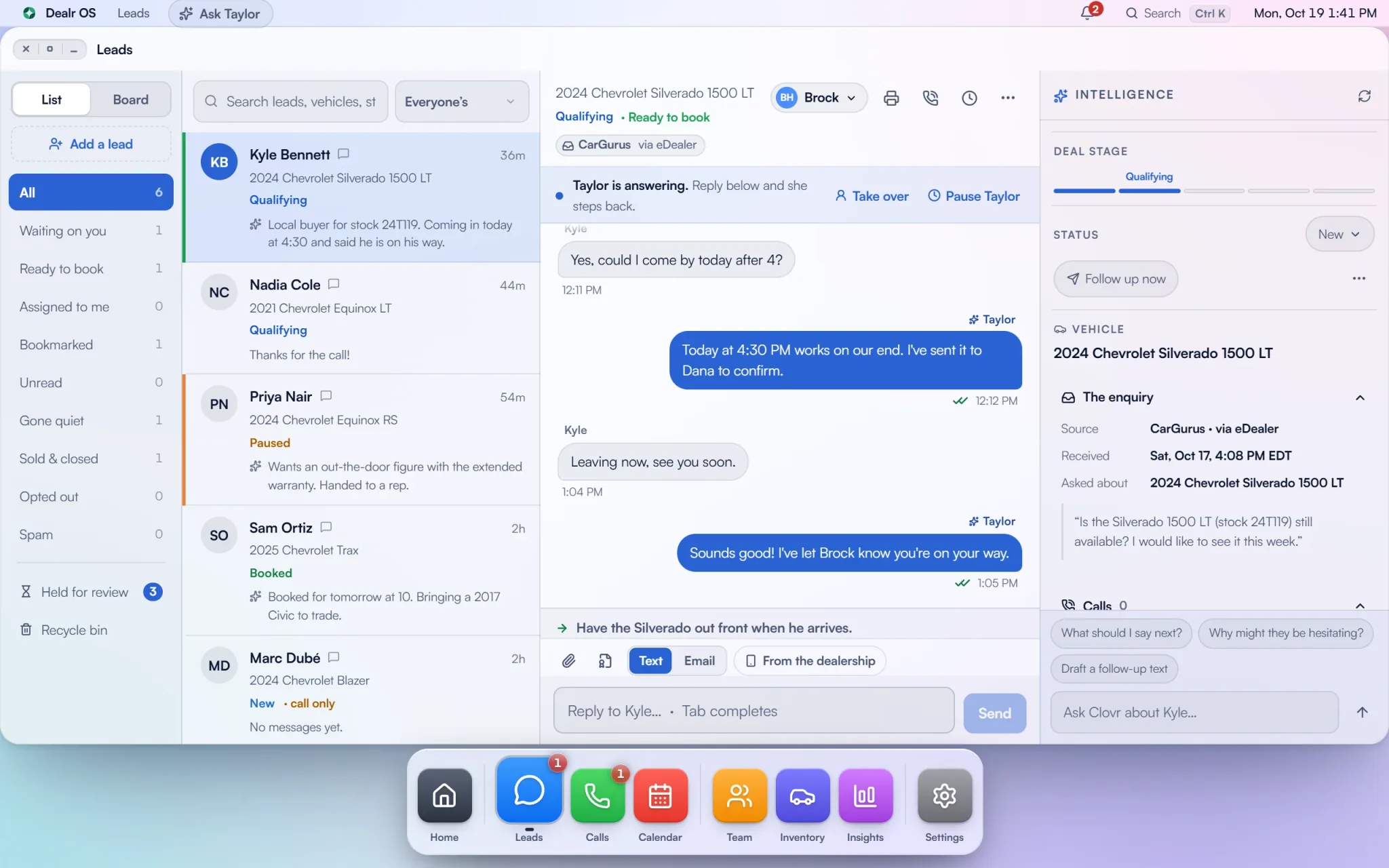
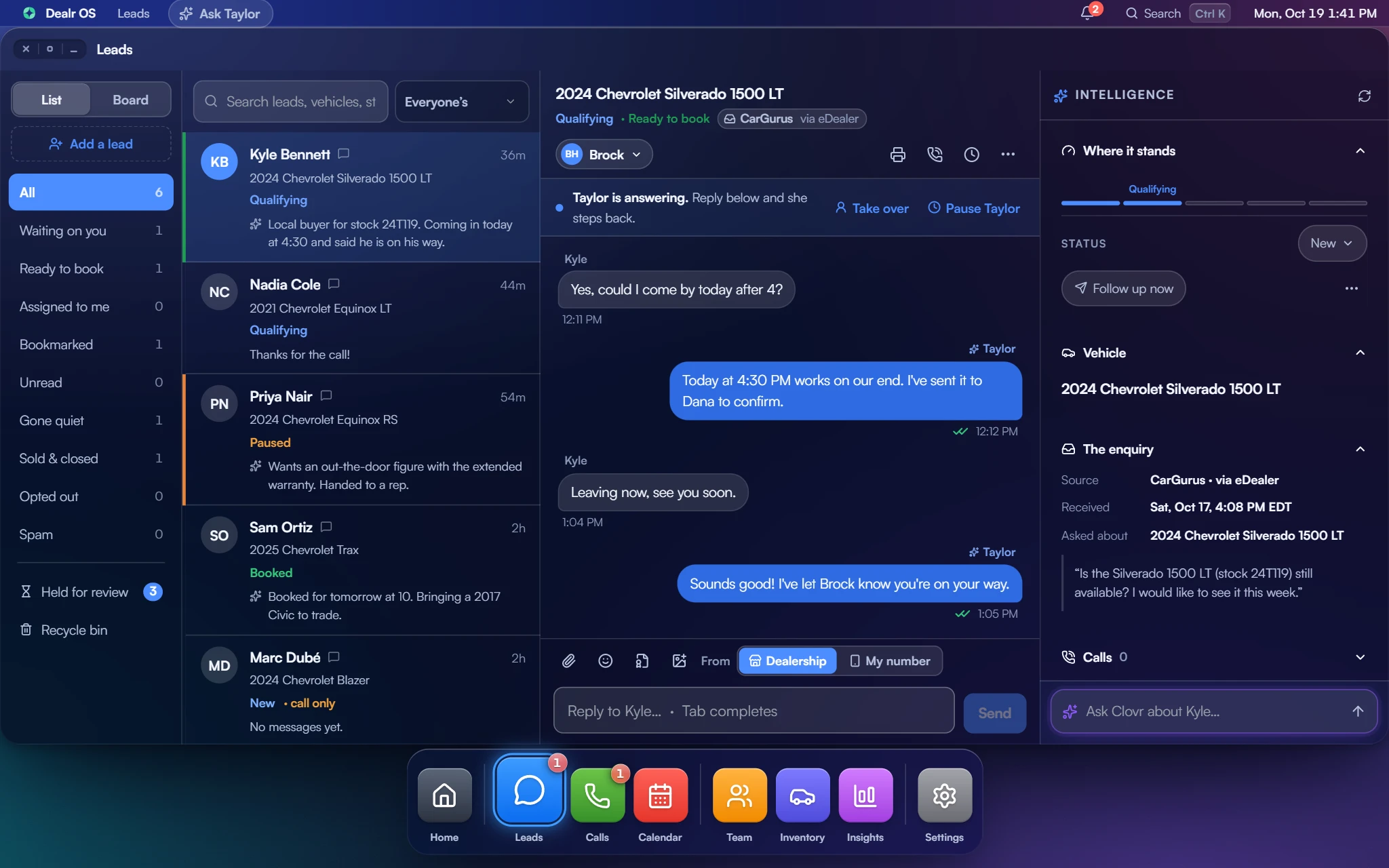
Hi Chris, it's Dana at Northbrook Motors. Yes, the grey Terrain is here, listed at {listed price}, same as on our website. Are you local, or would you be coming from out of the area?
Compare that with "Thanks for your interest. When can you come in?" It's quick, but it answers nothing. Then finish with an opt-out test: reply STOP to one thread and make sure nobody at the store texts that number again, from any line.
Gaps a lead response audit usually finds
- Leads that never reach a person. A third-party source routes to an inbox nobody watches, or to someone who has left.
- An auto-reply and nothing else. A canned email, then silence until the next day.
- Several people and no owner. A BDC rep texts, a salesperson calls and a manager emails, each one starting over.
- Dodged prices. "When can you come in?" instead of the listed price.
- Promises nobody keeps. "A manager will call you shortly," and nobody calls.
- Opt-outs that don't stick. You reply STOP, and a different rep texts the next day.
If the team knows a test is coming, you'll measure the test, not the store.
How to fix what the audit finds
Don't try to fix everything at once. Rank the gaps by how long a customer waited and how wrong the answer was, and start at the top. Most fixes are about process, not people:
- Routing. A source whose leads reach nobody is usually a setting. Fix it first, because it costs you every lead from that source.
- Coverage. Give evenings, weekends and holidays a named owner, decided in advance.
- Prices. Everyone answering leads should see the same current listed prices, and know to hand discounts and payments to the sales manager.
- Ownership. One owner per lead, and everyone else stays out of the thread.
- Opt-outs. Every opt-out applies across the whole store.
Share the results without naming anyone, and show the team the real threads. Reps rarely see their store from the customer's side, and seeing it changes how they answer. Then run the same audit next month, at the same hours and from the same sources.
If your audit shows leads waiting for a first reply, that's the gap Clovr Dealr is built for. Its assistant, Taylor, texts internet leads back within seconds during your texting hours, never pretends to be human, gives the listed price only and hands the lead to a rep. At Parry Sound Chevrolet Buick GMC, her first text during texting hours had a median of 5 seconds across 195 internet leads from July 11 to October 17, 2026. See the Parry Sound case study, or watch her answer a lead on a demo.
Questions dealers ask
How do you audit a dealership's lead response?
Send test leads at different hours and from each lead source, using contact details your team won't recognize. Time the first real reply, read it, and fix the biggest gap first.
Does an automatic email count as a response?
No. It confirms the lead arrived but doesn't answer the customer. Stop the clock at the first message that does.
How often should a dealership test its own lead response?
Monthly works well, with the same hours and sources each time so the results compare. Test again after any change to routing, staffing or software.
Should the sales team know about the test leads?
As few people as possible, or you'll measure the test instead of the store. Share the results afterward, including the actual threads.