What to look for in an AI assistant for your dealership
Every demo sounds good. These are the questions that tell you whether an AI assistant will follow your process on the leads nobody is watching.
Dealership AI5 min read
Start with the job you want done
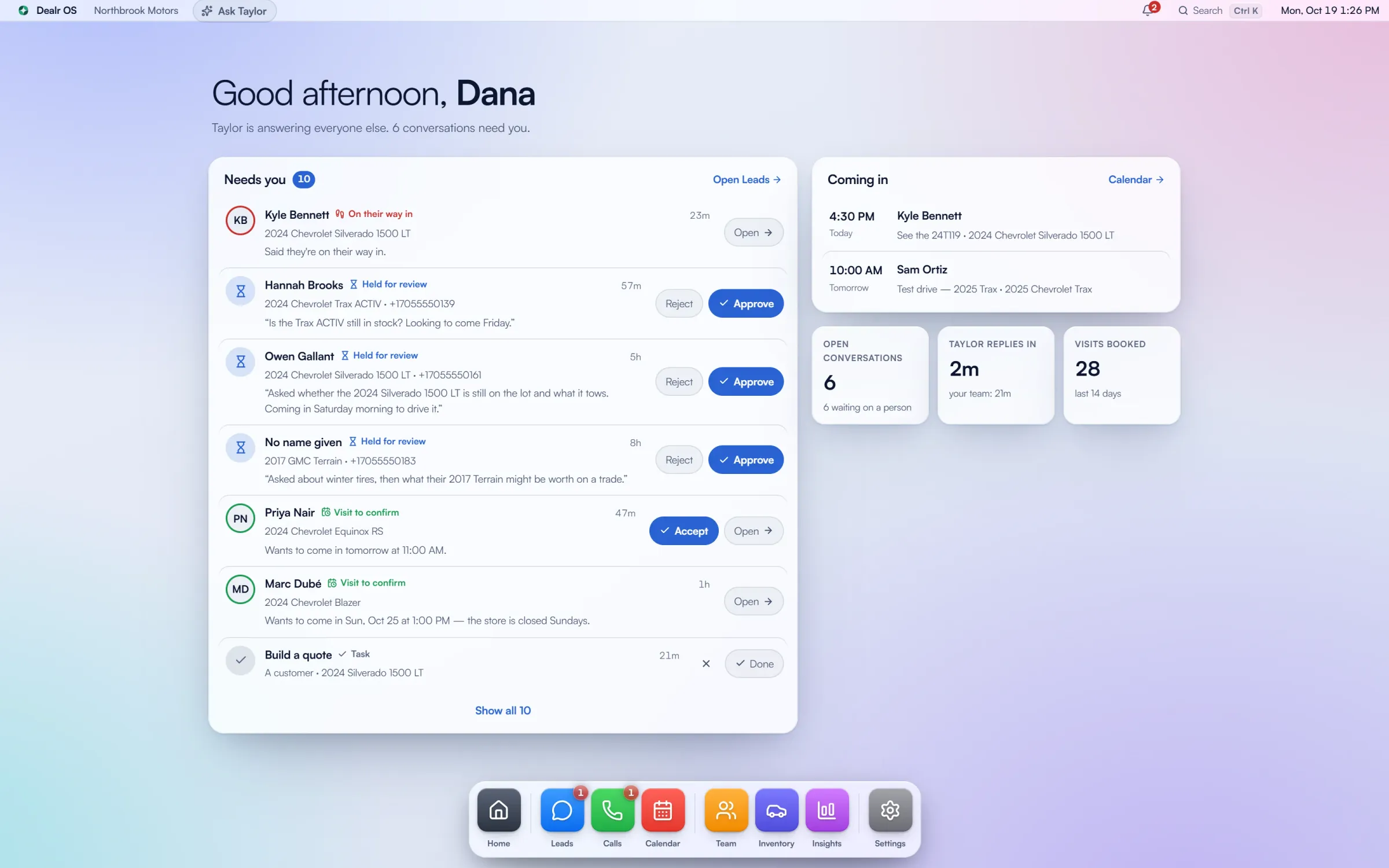
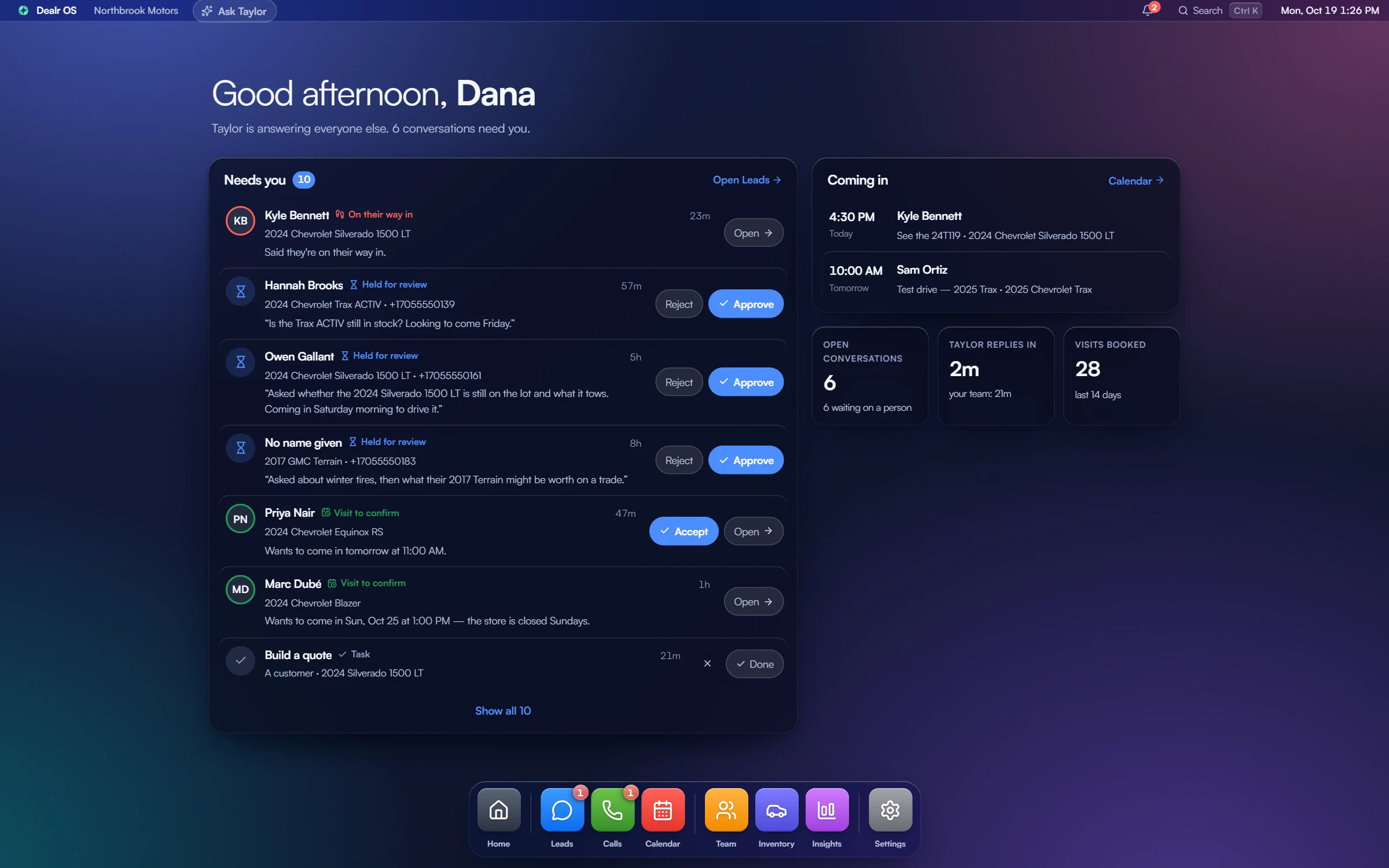
Before you look at any product, write down what you want the assistant to do. For most stores the list is short: answer internet leads quickly, find out whether the buyer is local, answer basic questions about the car, set up a visit, and get the lead to a rep with what they need to pick it up. That's the work a good BDC rep does on a busy day.
Then write down what you don't want it to do. Negotiate. Guess at a trade value. Tell a customer their rep will call right back when nobody has checked that the rep is free. Try to sell a car to someone who wrote in about an oil change. Any demo will show you the first list working. The second list is where stores get hurt.
If you're weighing an assistant against hiring, what a BDC really costs walks through that comparison. For the bigger picture of what AI does at a dealership today, start with AI for car dealerships.
Will the AI tell customers it's an AI?
Customers ask. Sometimes it's curiosity, sometimes it's a test. An assistant that dodges the question, or claims to be a person, puts your store's name on a lie. When the buyer finds out, and they usually do once they walk in, the trust goes and the deal often goes with it.
A good answer is plain and keeps the conversation moving. Something like: "No, I'm an AI assistant for Northbrook Motors. I can answer questions about the car and set up a visit, and a person from our sales team takes it from there." Ask the vendor to show you that exchange live, on their own system.
Will it quote a price it shouldn't?
Price is where an assistant can cost you real money. Check these before you sign anything:
- It gives the listed price only. Discounts, payments, rates and financing are the sales manager's call. The assistant should say so and hand off instead of estimating.
- It knows which car the customer means. If you have several of the same model, ask how it tells them apart. A stock number or VIN is safer than a model name.
- It keeps up with price changes. Ask what happens when you drop a price on your website. Does the assistant use the new price, or keep quoting the old one?
For the conversation itself, see answering "what's your best price?" by text.
How does the AI hand a lead to your team?
The point of an assistant is to get ready buyers to your people. Watch the handoff closely in the demo:
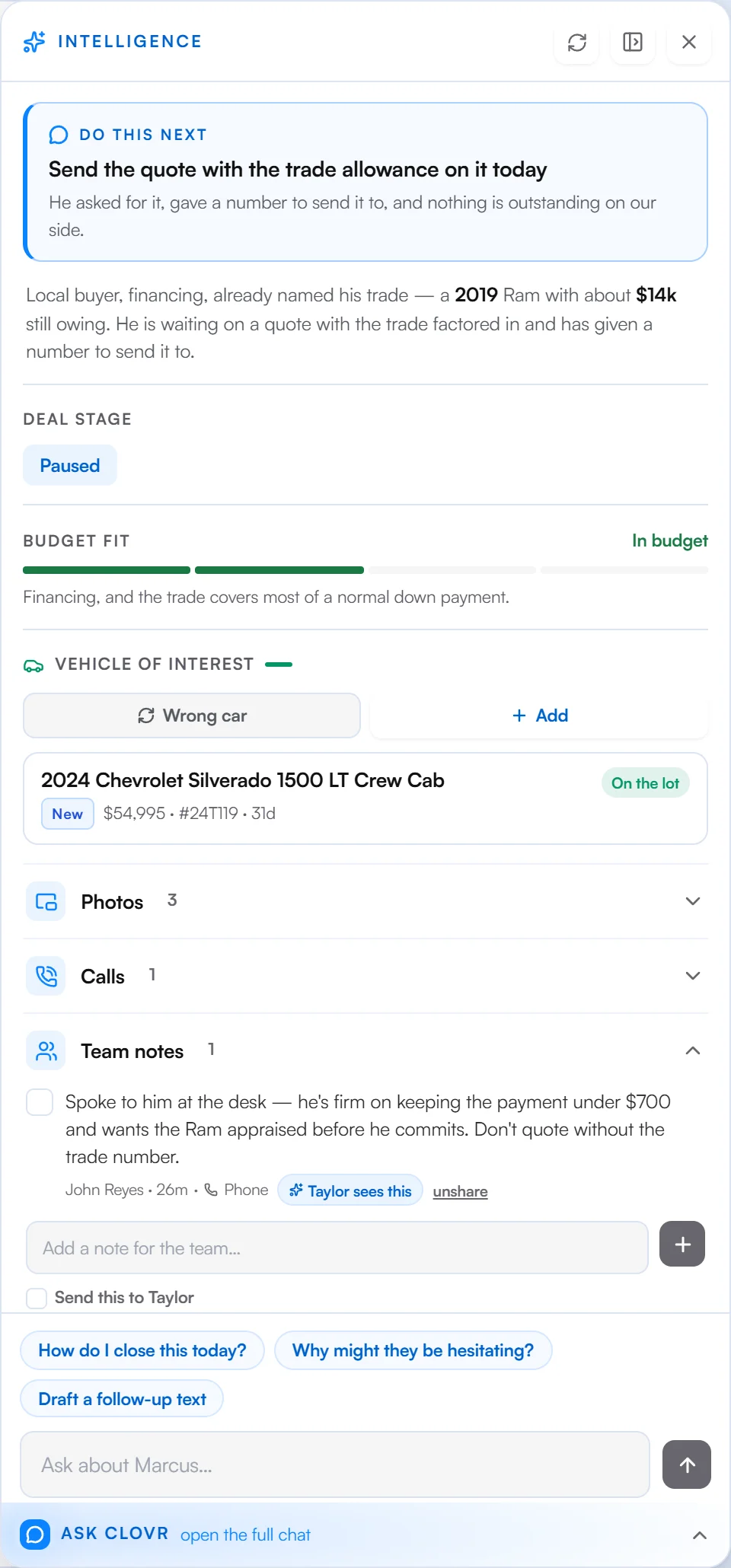
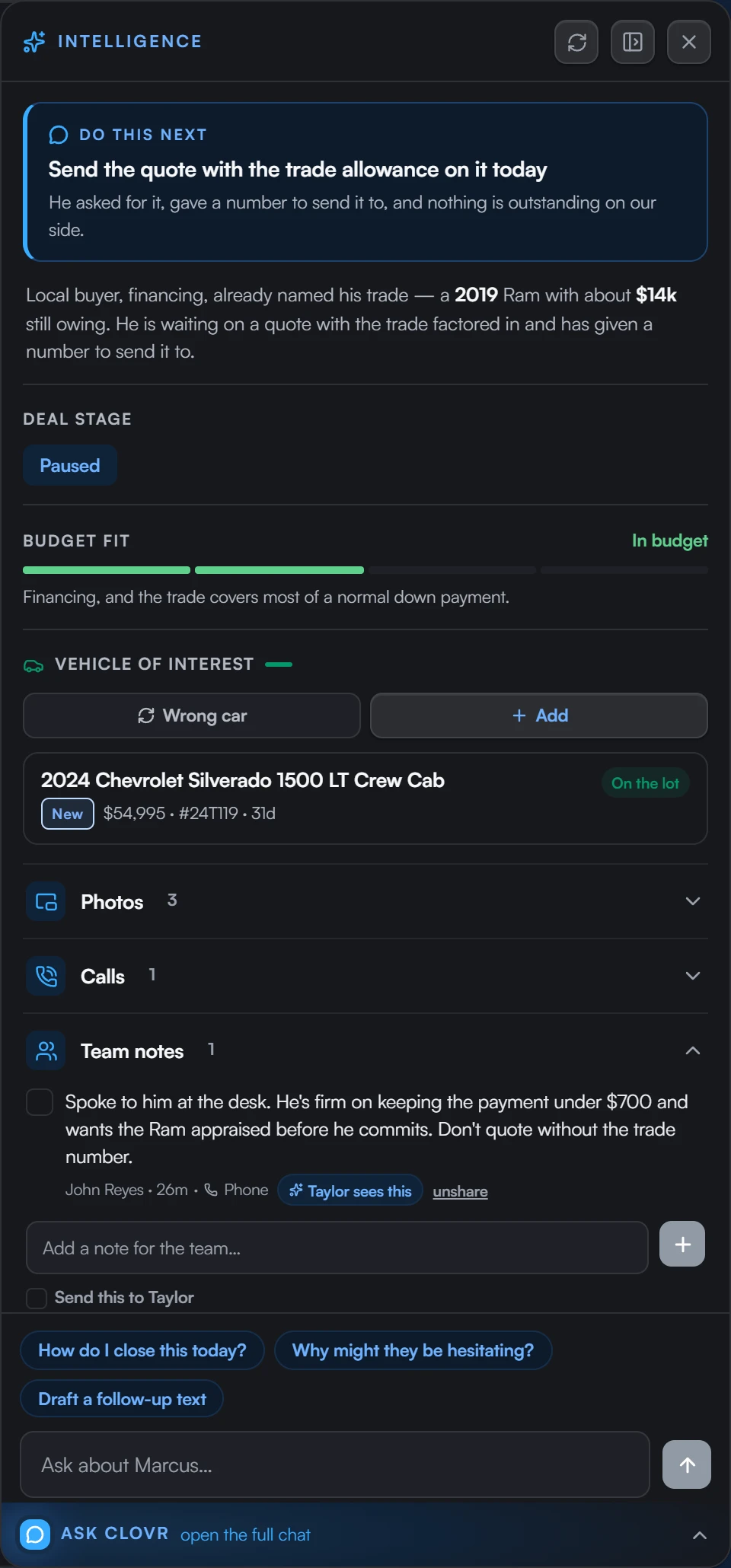
- Does the rep get the conversation and a short summary, or just a name and a phone number?
- Can a rep or manager take over a thread at any time, and does the assistant stay out of it once they do?
- Does it avoid promising when someone will call or text? "Someone will call you right away" turns into a broken promise on the first busy Saturday.
- Are booked visits approved by a manager before the customer hears they're confirmed?
- Do service requests get your service department's number instead of a sales pitch?
Can you see everything it said?
Every text the assistant sends goes out in your store's name. You need a complete record: every message, when it went out, and when a person took over. If a customer complains, you should be able to pull up the whole thread in a minute and see exactly what was said.
That record matters for compliance too. In Canada, CASL requires consent, sender identification and a working unsubscribe. In the US, the TCPA requires consent and limits when marketing texts can go out, and carriers require A2P 10DLC registration for business texting from local numbers. Ask how opt-outs are handled, whether the assistant respects your texting hours, and where customer data is stored.
Does a more advanced AI matter for a dealership?
It's tempting to compare assistants on how advanced the AI is. That's hard to verify in a demo, and it isn't what loses or wins deals at your store. What you can verify is behaviour: does it answer fast, ask the same good questions every time, stay honest about price and about being an AI, and follow your process instead of inventing its own?
Consistency is the real value. Your best rep is great on a quiet Tuesday. An assistant should be just as good on the Saturday the showroom is full and on the holiday Monday when the BDC is off.
Your best rep is great on a quiet Tuesday. An assistant should be just as good on the Saturday the showroom is full.
Questions to ask on an AI demo
- 1Text it as a customer and ask whether it's a real person.
- 2Ask for a discount and a monthly payment. It should give the listed price and hand off.
- 3Ask about a model you have several of, and check that it picks the right one.
- 4Send a service question and see where it goes.
- 5Take over a thread as a manager and check that the assistant stops.
- 6Pull the full history of one test lead.
- 7Text STOP and confirm that it stops for good.
We built Clovr Dealr around this list. Its assistant, Taylor, never pretends to be human, gives the listed price only, books visits for a manager to approve and hands the lead to a rep. Run the questions above against it on a demo.
Questions dealers ask
What should a dealership look for in an AI assistant?
Honest disclosure that it's an AI, listed prices only, a clean handoff to your reps, manager approval for booked visits and a complete record of every message. Fast, consistent replies matter more than how advanced the AI is.
Should a dealership AI tell customers it isn't a person?
It should never claim to be human, and it should never deny being an AI when a customer sincerely asks. Being caught pretending costs far more trust than the honest answer does.
Can an AI assistant give customers discounts or payment quotes?
It shouldn't. A safe assistant gives the listed price and leaves discounts, payments and financing to the sales manager.
Does an AI assistant replace a BDC?
It can handle the first reply, basic questions and booking visits, but people still negotiate, close deals and handle anything unusual. The usual goal is to give every internet lead the same fast start before a person takes over.