How to choose texting software for a car dealership
Plenty of buyers would rather text than take a call. Here's what to check in a dealership texting tool before it sends a single message in your store's name.
Team & tools5 min read
Why dealerships move texting off personal phones
At a lot of stores, texting started on reps' own phones. The problems show up later. A rep goes on vacation and nobody can see what was promised. A customer complains and there's no record. A rep leaves, and the conversations leave too.
Texting software moves those conversations onto store numbers, saved against the lead, where a manager can read them. That's the main reason to buy it. The rest of this guide is about doing it safely, and in a way your team will actually use.
Compliance features to check first
Every text goes out in your store's name, so the software should make the rules hard to break. The rules differ by country.
In Canada, CASL requires consent, sender identification and a working unsubscribe, honoured within 10 business days. An inquiry gives implied consent for 6 months, and a purchase gives implied consent for 2 years. Software should record when and how each customer's consent began, so you can see when it runs out. Our CASL guide for Canadian dealerships has the details.
In the US, the TCPA requires consent and limits marketing texts to between 8am and 9pm in the customer's time zone, and some states are stricter. Carriers require A2P 10DLC registration for business texting from local numbers, and unregistered texts can be filtered or blocked. See TCPA, quiet hours and 10DLC.
Whichever side of the border you're on, check that:
- An opt-out applies to the whole store, and works when a customer writes "please stop texting me" as well as STOP.
- Outbound texts follow your texting hours in the customer's time zone, not the store's.
- Consent and opt-out records stay with the lead, and you can export them.
- Your store's name appears in the first text.
Local numbers and text delivery
A local number looks like your store, and customers can call it back. Before you sign, ask:
- Can you text from a number customers already know, like your main line, or will you get a new one?
- Who owns the number if you leave the vendor, and can you take it with you?
- Can reps send and receive photos, such as a walkaround or pictures of a trade-in?
- In the US, whose brand is registered for 10DLC, who writes the campaign, and how long will registration take?
In the US, registration takes time, so plan for it before you switch numbers or launch a new tool.
What a dealership shared inbox needs
Shared inboxes fail in a familiar way: everybody can see the thread, so nobody answers it. The fix is ownership.
- Every thread has one owner, and the owner is someone working that day.
- The owner gets an alert when the customer replies, wherever they are in the store.
- Managers can see every thread where the customer wrote last and nobody has answered.
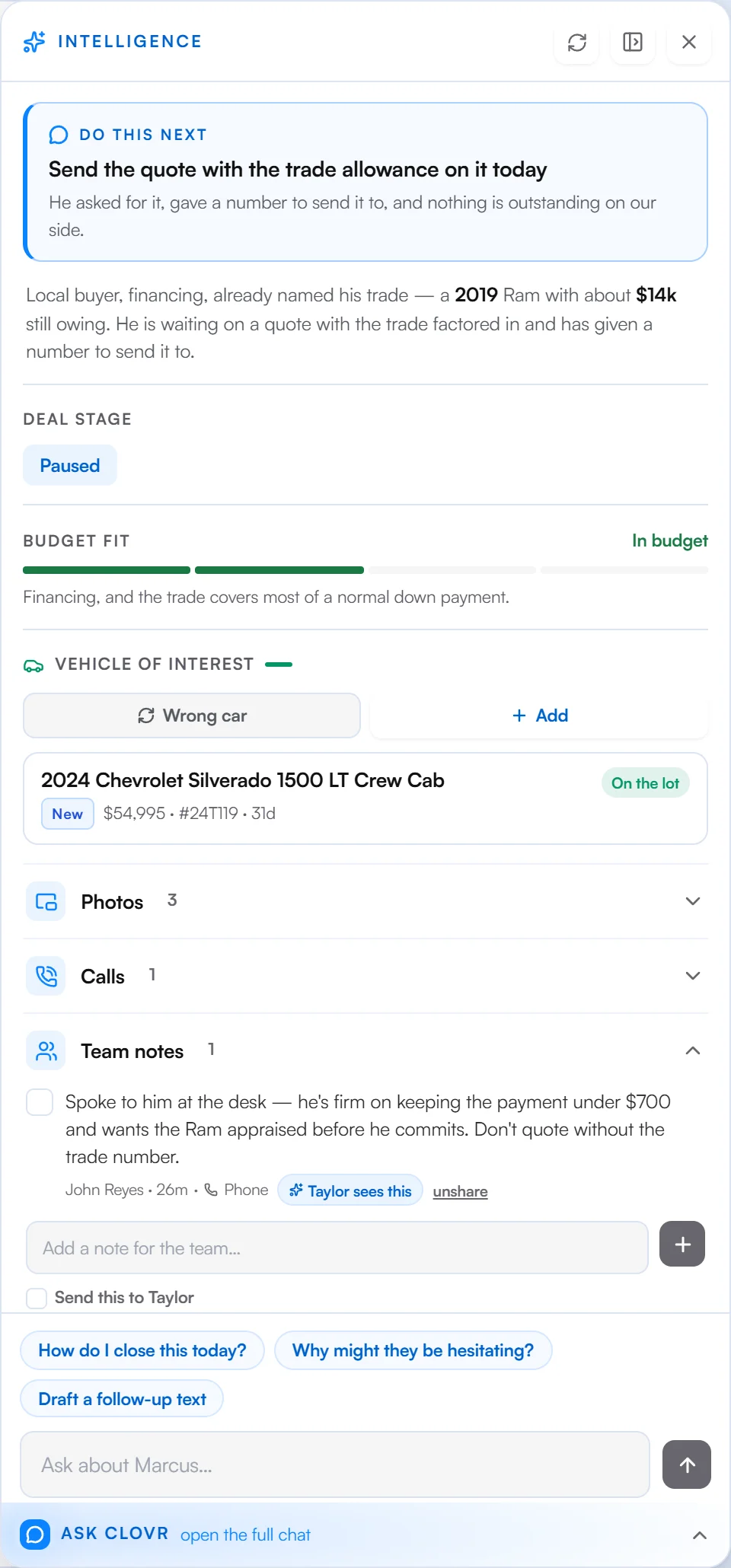
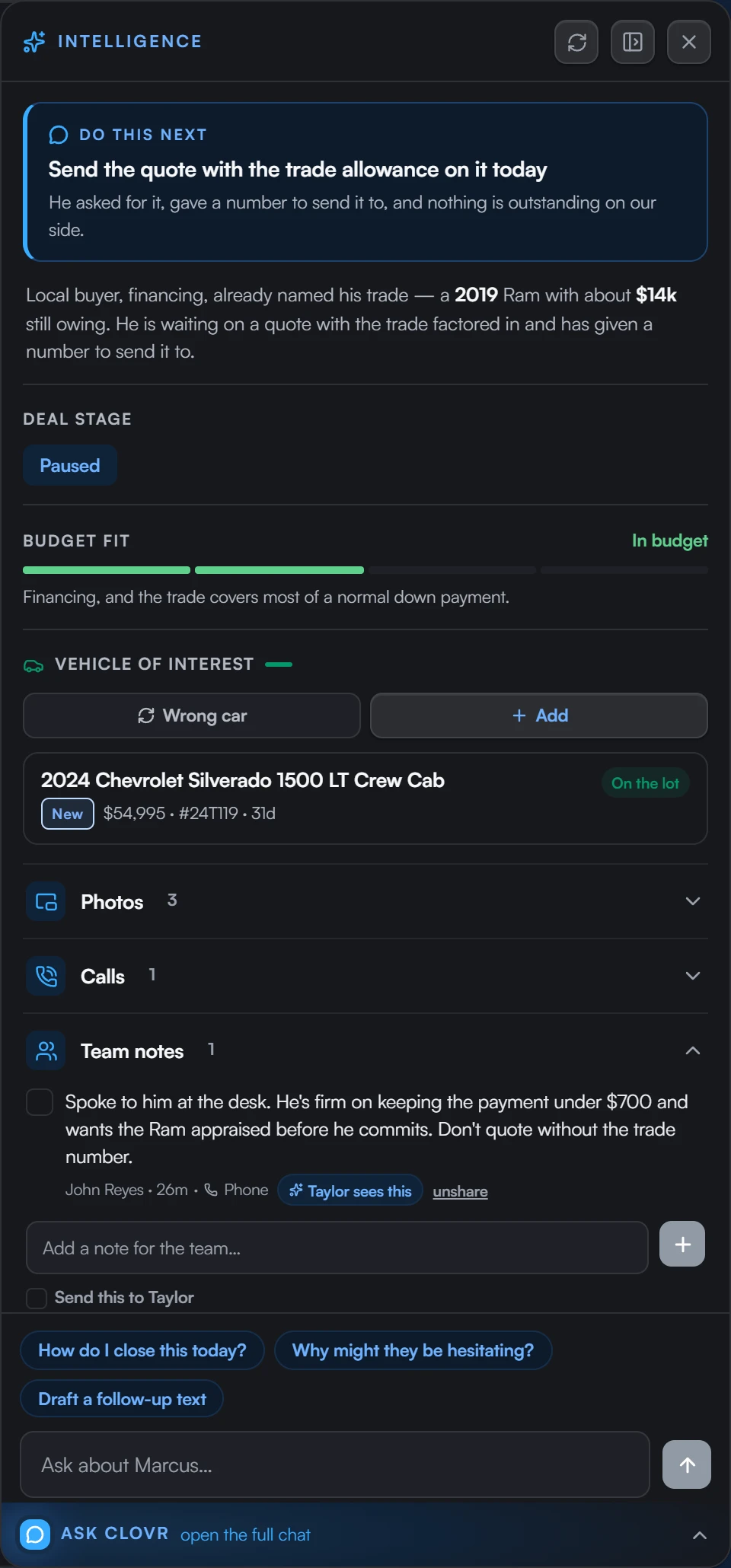
- Internal notes sit on the thread, visible to the team and never to the customer.
- When a lead changes hands, the new owner sees the full history and tells the customer who they're talking to.
Everybody can see the thread, so nobody answers it.
Handoffs between automation and your people
If a tool sends automated first replies or follow-ups, or uses an AI assistant to carry the conversation, look closely at the handoff:
- Once a person replies in a thread, the automation stops unless the rep hands it back.
- Automated texts never promise when a person will call or text.
- Automated prices are the listed price only, with discounts, payments and financing left to the sales manager.
- An AI assistant says it's an AI and never claims to be a person.
- Service requests get the service department's number instead of a sales pitch.
There's a fuller checklist in what to look for in an AI assistant for your dealership, and the bigger picture in our dealership AI guide.
CRM fit and lead sources
Texting software that doesn't fit your CRM gives the team a second place to look, and leads fall between the two. Check:
- How new leads get in: from your CRM, your website forms, lead emails and third-party listing sites.
- Whether texts are saved back to the lead, so the whole history lives in one place.
- Whether a customer who writes in from more than one site shows up once.
- If the tool answers questions about cars, whether it reads your current inventory and listed prices, and how fast it picks up a price change.
- Whether phone calls show on the lead too, so a text never ignores yesterday's call.
During the demo, send a test lead from each of your sources and watch where it lands.
Questions to ask a dealership texting vendor
- 1Whose numbers do we text from, and who owns them?
- 2How are opt-outs handled, including ones that don't say STOP?
- 3How do you handle texting hours and the customer's time zone?
- 4In the US, who registers our 10DLC brand and campaign?
- 5Where are messages and customer data stored, and can we export them?
- 6How is a thread assigned, and how does the owner know the customer replied?
- 7What happens to automated texts when a person takes over?
If you're also looking at tools that answer leads for you, Clovr Dealr's assistant, Taylor, texts internet leads back within seconds during the store's texting hours, books visits for a manager to approve and hands the lead to a rep. She never pretends to be human and gives the listed price only. You can put the questions above to us on a demo.
Questions dealers ask
What is dealership texting software?
A tool that lets a dealership text customers from store numbers, with every conversation saved on the lead and visible to the team. Good ones also handle consent, opt-outs, texting hours and handoffs between people.
Can salespeople text customers from their personal phones?
They can, but the dealership loses the record, the consent history and the conversation when the rep leaves. Moving sales texting onto store numbers keeps all of it with the store.
Do US dealerships need 10DLC registration to text customers?
If you text customers from a local business number through software, US carriers require A2P 10DLC registration. Unregistered texts can be filtered or blocked, so ask your vendor who registers your brand and campaign.
What should dealership texting software connect to?
Your CRM and every lead source, so new leads arrive in one place and every text is saved on the lead. If it answers questions about cars, it also needs your current inventory and listed prices.